
This article explores “How to Do GEO Optimization: 5 Steps from Zero to Being Cited by AI” through GEO Optimization, GEO, SEO, and AI search visibility so readers can quickly assess whether the approach fits their business context.
Let's be blunt: GEO optimization has no black magic. It is a content restructuring process. Over the past year we have run dozens of GEO audits (127 checkpoints each) for overseas brands, and 90% of sites fail the same way — not because they lack good content, but because the content is shaped in a way AI cannot extract from.
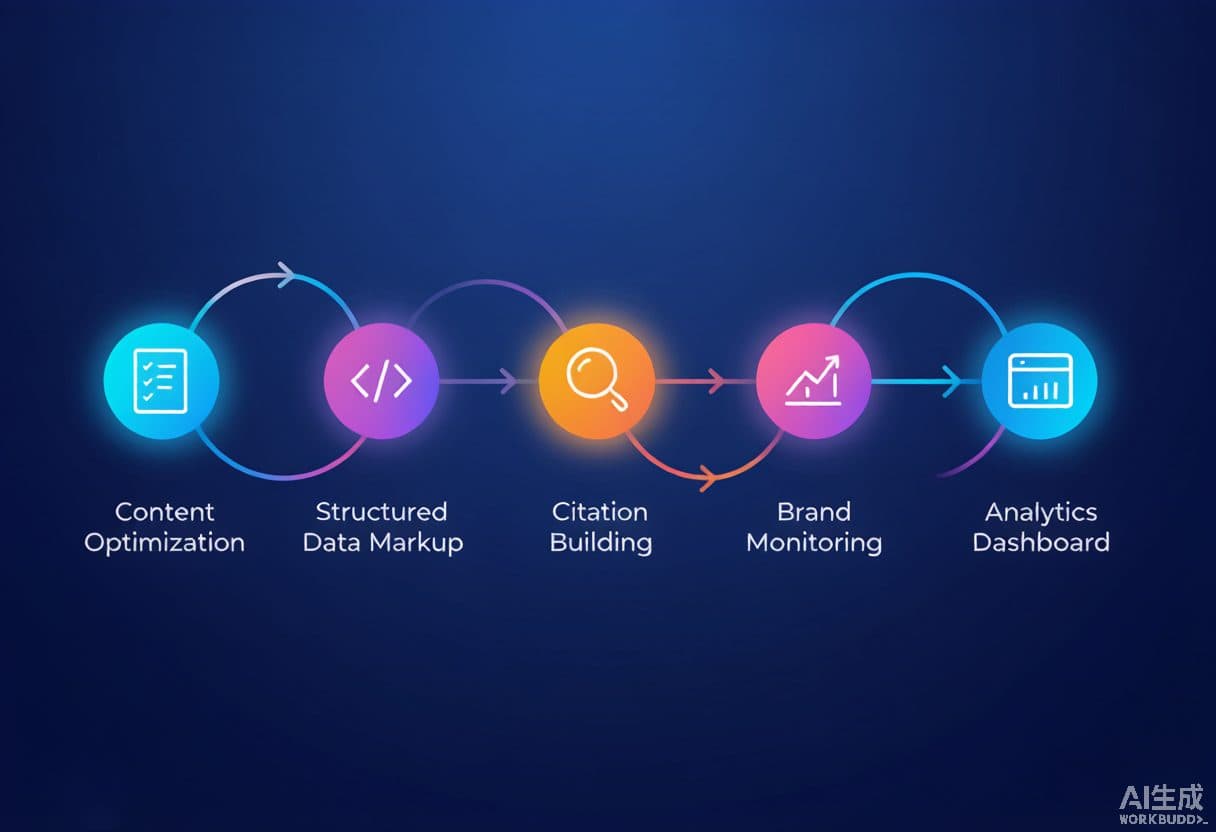
This article breaks the process into 5 steps, each with concrete actions and a pass/fail criterion. Do them in order, come back to the monitoring dashboard in 2-3 months, and citations will start showing up.
Step 1: Find the questions AI will actually answer
AI only cites content that answers a user's question. So step one is not deciding what to write — it is finding what your customers actually ask AI. Three sources: verbatim quotes from customer interviews, questions your support and sales teams get asked repeatedly, and real pain points from industry forums like Reddit.
Turn these into a question list; every question is a content topic. The bar is simple: if you would both search it and ask an AI about it, it is worth covering. For a deeper take on mining keywords from questions, see To Get Recommended by ChatGPT, Mine Keywords from Customer Questions.
Step 2: Put the answer first
When AI extracts an answer, it leans on opening paragraphs and the first sentence under each heading. Conclusion-first is not a style preference — it is a technical prerequisite for being cited.
The correct structure: the first paragraph delivers the full answer (what, why, how), every following heading is a question, and the first line under each heading is the answer before the elaboration. After we rebuilt all 36 articles on our site to this standard, the AI extraction hit-rate rose noticeably.
For the fine-grained formatting rules (paragraph length, lists, when to bold), see Why AI Quotes This Paragraph and Not That One: 6 GEO Formatting Details.
Step 3: Back every claim with a verifiable number
AI answer systems are designed to prefer checkable content over polished claims. Marketing statements without numbers carry near-zero weight in AI ranking.
How: replace every abstract claim with a verifiable figure. Not "significant results" but "search exposure up 68.9%"; not "industry-leading" but "audits covering 127 checkpoints". The numbers must be real and checkable — in the AI ecosystem, fabricated figures cost more than fabricated content. Once detected, the credibility of the whole domain suffers.
A second common miss: conclusions without methods. AI favors content that is reproducible, which is one reason community content gets cited disproportionately (see Reddit GEO Playbook: 6 Steps from Zero to Being Cited by AI).
Step 4: Use structured data to tell AI what a block is
Structured data like FAQPage and Article is effectively a content spec sheet for AI. Declare each question as its own entry and the AI can read the question-answer pairs directly, cutting extraction cost sharply.
Practice: put a 4-to-6-question FAQ block at the bottom of every article and output the matching FAQPage JSON-LD on the page. We added this to all 36 articles, in both Chinese and English. The questions must come from the real customer questions in step 1 — do not invent them to pad the block; AI's ability to spot low-quality FAQ markup is already strong.
Step 5: Monitor, submit, iterate
Content restructuring is not the finish line — AI engines need to know you updated. Two things: keep the sitemap fresh, and hook up IndexNow so search engines are notified on update instead of waiting for the next crawl.
Then close the loop: check AI traffic and citation records weekly (Bing Webmaster's AI Performance and third-party citation trackers both work), cross-reference "which terms got cited" with "which questions users ask", and next month's topics write themselves. Once this loop runs, GEO becomes a compounding growth system rather than a one-off project.
For the mechanics of citation itself, read GEO in Practice: Getting More Brand Mentions in ChatGPT.

